Sailing analysis · Inshore
Inshore race analysis and debriefs
I can review a start, maneuver or leg with you and your coach. We compare the recordings with the crew’s account, look for repeated patterns and choose what to work on next.
Make the next practice count
Months ahead, choose the event your season is building toward and a goal the crew shares. Nearer the start, focus on what still needs rehearsing. If you have two practice days and often lose your lane after the start, we can use that question to shape the sessions with your crew or coach.
Agree who calls time, traffic and changes in pressure, and discuss the next move if the first plan fails. After sailing, keep one useful observation and the next thing to test. The debrief then becomes a starting point for the next regatta.
Comparing maneuvers fairly
A tack review covers the approach through to speed recovery on the new course. Entry speed and time spent turning affect the total loss. Comparing only the lowest speed can favor a maneuver that preserves speed briefly but takes much longer to settle.
The Exile study aligns recorded turns at the detected crossing in wind angle. It shows boat speed before, during and after each turn across six instrument source groups, including practice and transit. Speed through water (BSP) and speed over ground (SOG) remain separate channels, so current is not mistaken for a change in the boat’s performance.
In that study, recovery means reaching at least 95% of entry boat speed and holding it for five seconds after the speed trough. The observation ends at a channel gap, the next maneuver, the end of the log or 120 seconds. Recovery is recorded as unavailable when a turn does not meet the criterion within that window.
| Measure | What to examine |
|---|---|
| Entry speed | Whether both maneuvers began from a comparable sailing state. Recovering to a low entry speed can look deceptively quick. |
| Turn and recovery | How long the heading transition takes and how much of the loss occurs while accelerating afterward. |
| Distance deficit | The integrated speed loss against a stated reference. Holding entry speed and interpolating between entry and exit speeds give different comparisons. |
| Coverage | Whether the relevant speed and wind samples exist throughout the interval, and why any measurement was excluded. |
Distance deficit measures loss against the chosen speed reference. Calculating distance lost to a rival or to the mark also requires the route and the rival’s motion. The crew’s reason for maneuvering helps explain whether the loss was worthwhile.
With a coach, we can review handling across comparable turns and choose one change to test at the next session. Comparisons should stay within similar wind ranges and maneuver conditions.
Starts and mark roundings
At a start, we can examine the final acceleration, distance to the line and heading, then follow the boat to see how long it keeps its lane. A precise timing comparison needs the line geometry and a verified start signal time aligned with the recording.
To understand whether traffic forced a turn, we need more than the boat’s own GPS track. Fleet tracks can show the space between boats; video and notes made at the time can help establish what the crew saw. We label any inferred course geometry or unconfirmed race boundaries.
A short mark approach may require a slow turn or leave the boat behind traffic. We compare the approach and rounding through to speed recovery and the first available lane on the next leg.
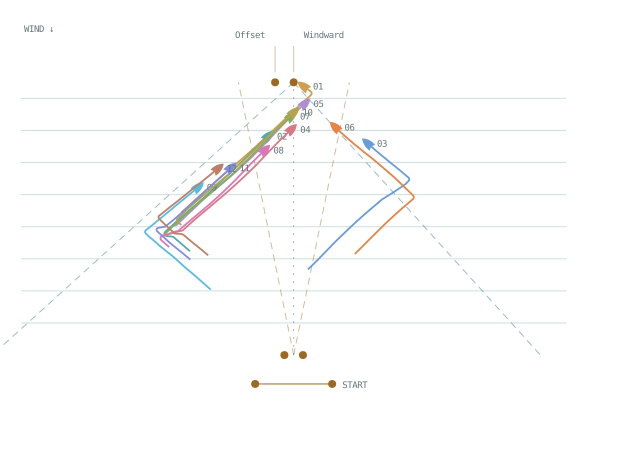
In this replay, follow one boat through the start or a gate rounding, then select a nearby boat and inspect the same interval. Compare the approach with the speed and heading after the turn.
The twelve Chicago J/88s shown here are a simulation using polars derived from Exile’s data and simulated crew differences. Exile is assigned the winning track. The replay does not represent historical results or rankings of the named crews.
Boat speed and observed polars
For steady sailing comparisons, we select samples with similar wind strength and angle, sail configuration, sea state and recent maneuver history. Averaging across different conditions can hide a pattern or suggest an improvement caused by the conditions.
The Exile analysis groups measured speed by true wind strength and absolute true wind angle. Its port and starboard comparisons use the same wind bins and require at least 30 observations on each tack. Repeated samples within a sailing period are correlated. Differences between tacks may warrant checking calibration or trim, though the speed measurements alone cannot identify the cause.
An observed polar describes the sailing represented in the recordings. Sparse wind bands and missing angles remain gaps. For a routing polar or training target, we also need to assess what the crew can sustain with the intended sails. We compare that target with the observations before proposing changes.
The TP52 study applies the same maneuver and wind comparisons to eight recorded sessions. The performance research collection also includes coastal records with different channel coverage. Each study documents its available measurements and exclusions.
Planning the debrief
We select sessions around your question. Inconsistent tack recovery calls for several comparable turns; losing a lane after the start requires a closer look at traffic. A polar target that is hard to sustain needs steady sailing records in the relevant wind range.
A debrief can include annotated traces and the crew’s explanation of selected events, with exclusions documented. A coach can use these to plan an exercise with a consistent entry condition and one handling change, then compare the measurements afterward.
If the recordings leave the cause uncertain, we can plan what to record next. For example, missing wind data may prevent a polar analysis even when there is enough information to review timing. We can use the timing measurements in the debrief and plan another recording for the polar analysis.
Arrange an inshore review
Tell me about the boat, the event date, the practice time available, and what the crew wants to improve. Crew notes are a useful starting point; describe any recordings you already have. We’ll agree the scope and timing, and how to exchange files privately.